Heartland Fresh Pak

High-Capacity Potato Wash Line 


parallax image

The Challenge

Heartland Fresh Pak, a potato operation in Canada, needed a wash line capable of handling high volumes of varietal potatoes—reds, yellows, and russets—at 50–60 tonnes per hour. The solution had to integrate seamlessly with their existing flume pit and downstream optical grading equipment, while maintaining product quality and efficient water use.
The Solution


Wyma designed and supplied a complete wash line that takes potatoes from the existing flume pit through to optical grading, with full integration into the customer's infrastructure.


Intake and Debris Removal


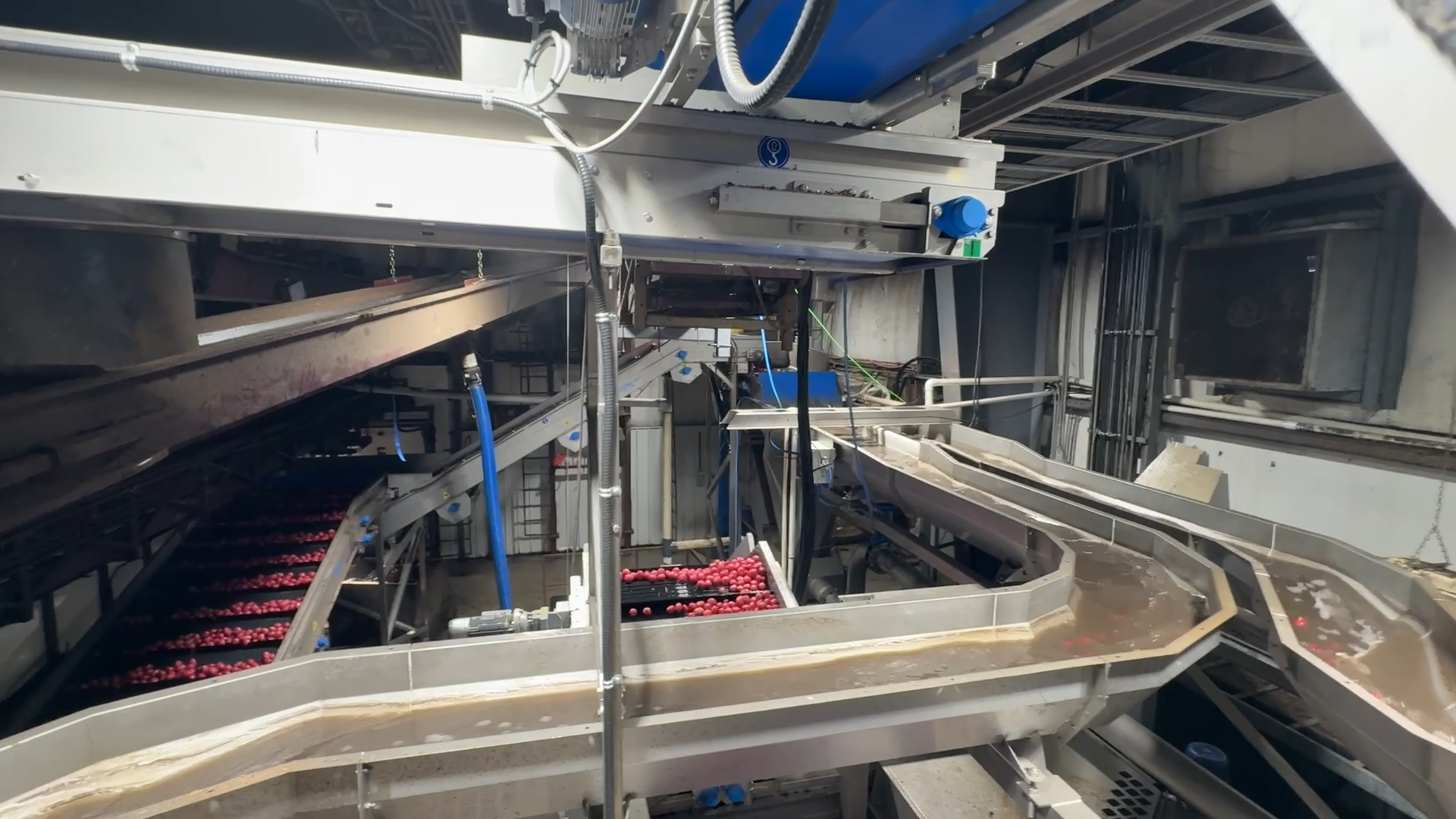
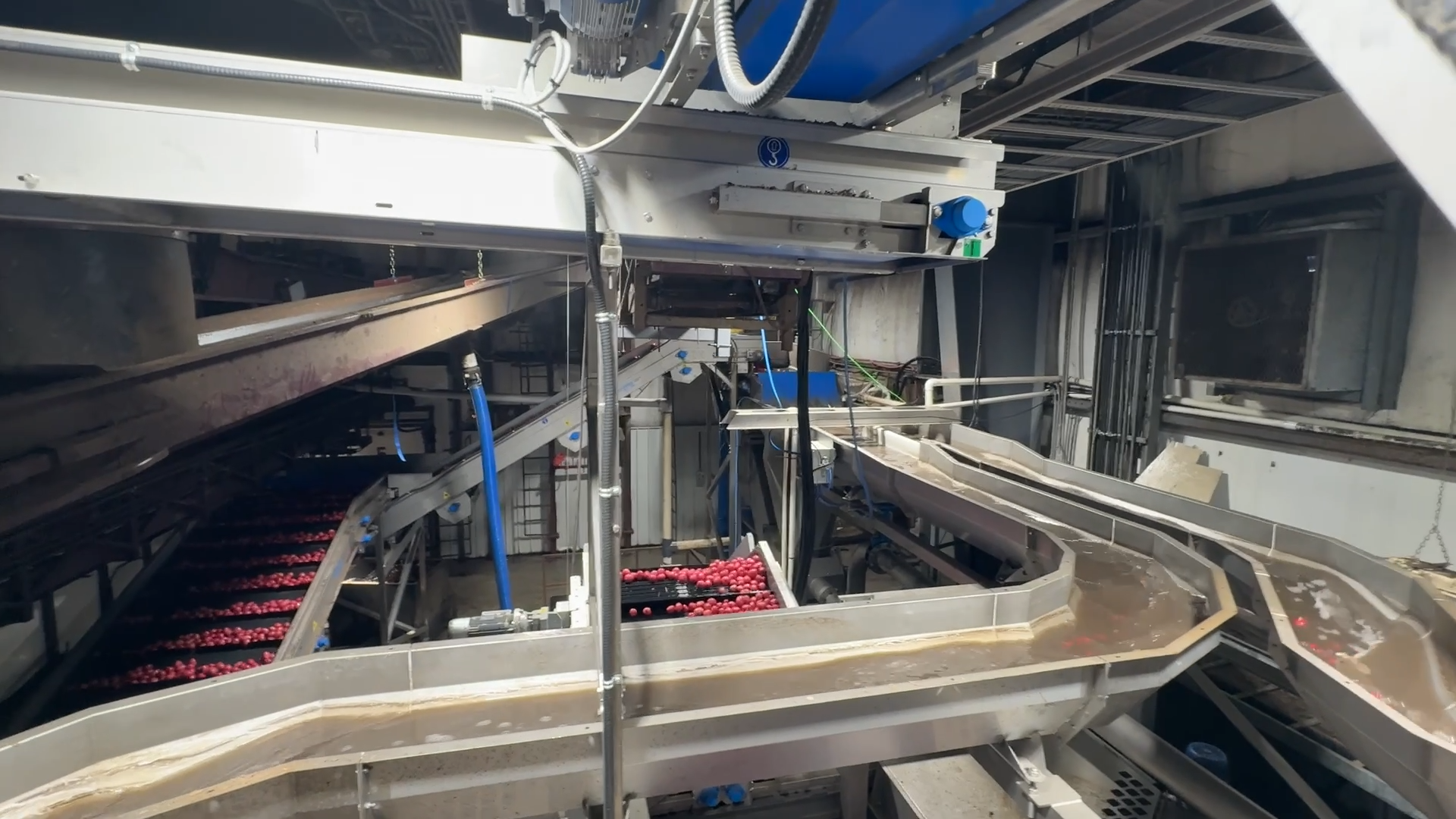
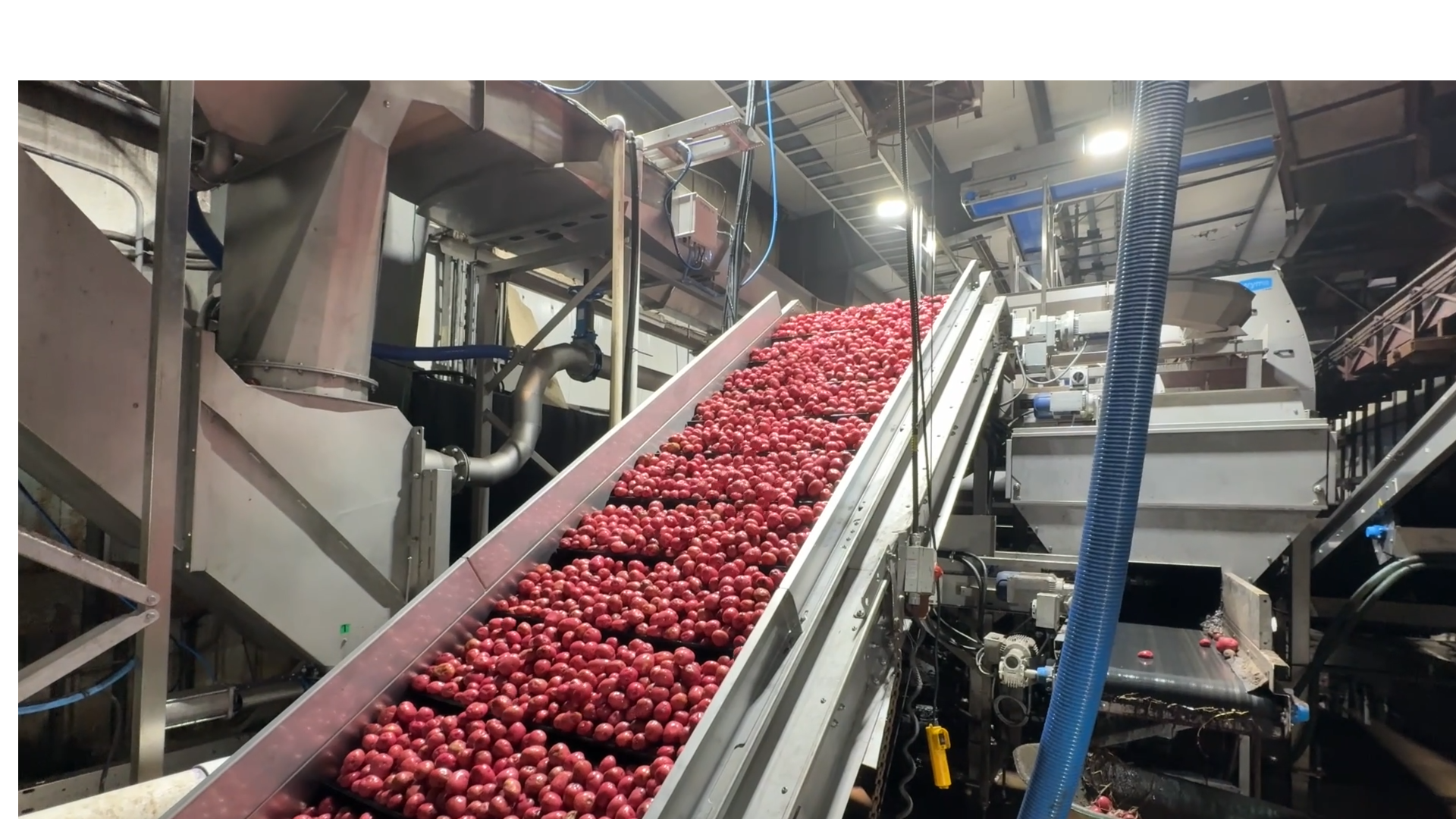
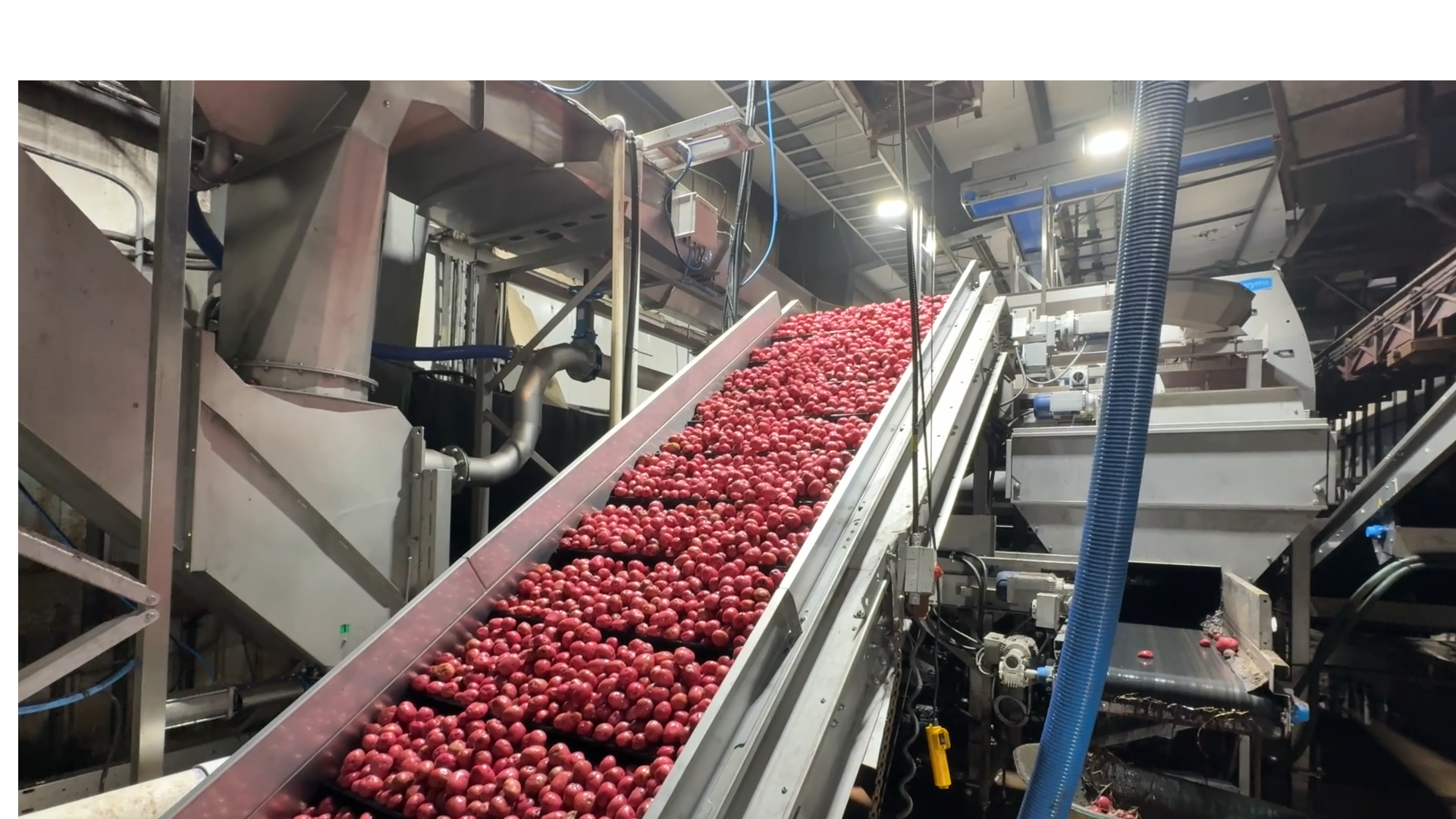
Potatoes are flumed from storage into the existing wash pit, then conveyed via a 48-inch Elevator onto perpendicular splitter belts. These divide the product flow equally between two Horizontal Debris Removers. The pintle belt system traps organic material—grass, vine, and corn cob—while a powered roller shear transfers clean product to the next stage. Debris from both units merges onto a common belt and drops into a waste bin.

Heartland photo 1-1


Flume Destoning


Product is elevated to a Flume Destoner fed by a 48-inch belt. The destoner uses a pump-generated upwell of water through a 39-inch wide channel to keep potatoes buoyant while stones drop through and are collected by an elevator into a separate bin.

Heartland Video - trimmed-1


Polishing with Flexible Operation


A pneumatically controlled flume diverter allows operators to split product flow between two Vege-Polishers or direct all product to a single unit, providing flexibility during maintenance or reduced-capacity operation. The Vege-Polisher 3518 is Wyma’s largest polisher, capable of washing up to 30–35 t/h of potatoes. Each unit uses a rotating drum and nylon brushes to clean and polish the potatoes while applying controlled water showers.


Heartland Video - trimmed(2)-1


Water System


Flumes dewater into the polishers, with process water pumped from the polisher tanks through a Rotary Filter and returned to the destoner. Clarified water from the rotary filter is reused for the polisher spray bars, while fresh water is added as required to maintain system performance based on dirt levels.


Drying and Treatment


Product discharges onto 36-inch elevators feeding 5-foot wide Flat Bed Brushers. Each table has 25 rollers—a combination of felt and nylon brush rollers configured to suit the product. Automated wiper modules clear remaining product at the end of each run. The discharge end includes spray bars for a final rinse and application of sprout inhibitor or similar treatment.

Heartland Video - trimmed(5)


Integrating with Existing Equipment


Potatoes discharge directly into optical grading units that sort product into three grades. Number 1 grade merges from both graders and travels via elevators to the customer's sizer, with an option to reverse a conveyor and send product directly to bunkers. Number 2 grade is delivered via elevators to an existing dual bin filler.


The Outcome

Overall, the wash line provides a robust and efficient solution for high-throughput potato processing, handling up to 50-60 tonnes per hour with consistent wash quality. The integration of flume-fed infeed, controlled elevation, effective washing, and a water system ensures reliable operation while managing dirt load and water use efficiently. This configuration supports stable day-to-day performance and offers a practical, scalable foundation for high-capacity potato handling operations.

Ready to Transform Your Operation?

Contact us today to discuss your project.