
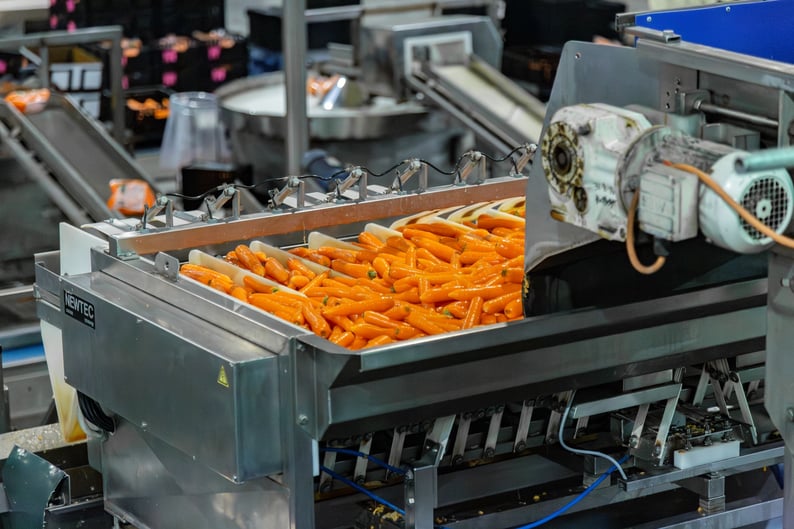
Designed for long-term performance. Learn what influences processing line lifespan and how smart design decisions can deliver 20+ years of value.
“How long should a processing line last?”
It’s a question we hear often, usually early in a project and often framed around budget. While there’s no single answer that fits every operation, well designed post-harvest processing lines are commonly expected to deliver around 20 years of productive life. The real difference lies not in the headline lifespan, but in how much value the line delivers over that time.
Lifespan starts with design, not price
The longevity of a processing line is largely determined long before the first crop runs through it. Design quality plays a critical role. This includes robust mechanical engineering, appropriate material selection, and layouts that prioritise smooth product flow and gentle handling.
Lines designed purely to meet an upfront budget often achieve a lower entry price but may introduce hidden costs later. Higher wear, reduced flexibility, or limitations when production demands change are common outcomes. In contrast,designs that consider long term performance tend to age better, adapt more easily, and retain value for longer.
Maintenance planned or reactive
Even the best designed equipment requires care. Preventative maintenance, access to spare parts, and trained operators all have a direct impact on how long a line remains productive.
Lines that are easy to maintain, with clear access points, standardised components, andsensible layouts, encourage routine servicing rather than reactive fixes. Overtime, this reduces unplanned downtime and helps protect the original investment.
Designed to evolve, not be replaced
One of the biggest threats to equipment lifespan isn’t mechanical failure. It’s obsolescence. Retail requirements, labour availability, sustainability targets,and throughput expectations all change over time.
Processing lines that are designed with future upgrades in mind, such as modular sections,allowance for automation, or integration with new technologies, can evolve alongside the business. Incremental upgrades often extend the useful life of a line to its full 20 year potential without the need for full replacement.
Operational practices matter
How a line is run day to day also influences its lifespan. Consistent loading, correct operating speeds, trained staff, and respect for design limits all help reduce unnecessary stress on equipment.
Small operational choices, repeated over many seasons, can significantly shorten or extend the life of a system.
Looking beyond purchase price
When evaluating how long a processing line should last, it’s worth shifting the conversation from “What does it cost?” to “What does it deliver over time?”
Total cost of ownership includes:
- Energy and water efficiency
- Labour requirements
- Maintenance and downtime
- Upgrade potential
- Product quality and yield
A line that costs more upfront but performs reliably for 20 years, adapts to change, and maintains output quality often proves to be the lower cost option in the long run.
Designing for long term value
A 20 year lifespan isn’t unusual for a well-designed processing line. The most successful investments are those that remain relevant, efficient, and well supported throughout that time.
By focusing on quality design, proactive maintenance, future flexibility, and smart operational practices, processors can ensure their lines don’t just last but continue to add value year after year.
If you’re planning for the next phase of your operation,it’s worth thinking about how your line can deliver value not just today, but for the next 20 years. Talk to our experienced team today sales@wymasolutions.com.
-
Carrot and Parsnip Processing Trends Across Global MarketsApril 15, 2026
-
-

