
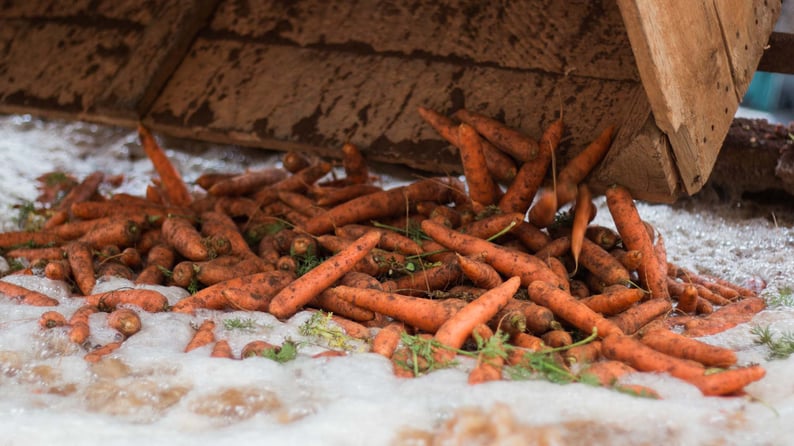
Practical steps to prepare your processing line for peak season, covering throughput optimisation, cleaning, and calibration to ensure consistent performance under increased load.
Spring doesn't ease you in. One week you're running at a manageable pace, the next you're pushing the line harder than it's seen in months. That gap between where you are and where you need to be is exactly where problems hide.
The good news is that most of what goes wrong during peak season is predictable, and preventable. A bit of structured preparation now saves a lot of reactive firefighting later.
Where things start to unravel
Lines that run fine at moderate volumes have a way of exposing their weaknesses under pressure. A roller that's slightly worn, a sensor that's drifted, a belt that's a touch too loose, none of it matters much until throughput doubles and suddenly it matters a lot.
The usual culprits are familiar: one machine quietly bottlenecking the rest of the line, debris build-up that's been accumulating since the last busy period, calibration that was set for last season's crop and hasn't been touched since, and components that were always on borrowed time. Under sustained load, these stop being background issues and start being the reason your shift goes sideways.
Getting the line balanced
Before volumes climb, walk the line while it's running and just watch. Product stacking up in one place, machines running empty further down, that tells you more than any report. Conveyor speeds, transition points, hoppers and surge bins: these are the places where small mismatches compound into real throughput losses.
Balancing isn't always a major intervention. Sometimes it's a speed adjustment here, a flow tweak there. But you need to see what's actually happening before you can fix it.
Cleaning, not just hygiene, but performance
Settings from the back end of last season may not suit what's coming off the field now. Optical graders, sizing and cutting equipment, grading parameters, all of these should be tested and adjusted before intake picks up, not after you've noticed quality problems.
The only way to know your calibration is right is to run real product through it. Do that before peak, and you have time to correct. Do it during peak, and you're managing a quality issue under pressure.
The quick wins
Some of the most valuable prep work takes an hour or less. Belts, brushes, and rollers that are near end-of-life are worth replacing before they fail, the cost of the part is nothing compared to unplanned downtime. Check alignment and tension, service lubrication points, verify your water pressure and spray performance.
These aren't glamorous tasks. They're also the ones that keep the line running when everything else is demanding your attention.
Before you ramp up — a final check
- Line cleaned and inspected end to end
- Calibration tested with actual product
- Worn or borderline components replaced
- Line run at target throughput before intake peaks
- Critical spares on site, not on order
- Operators familiar with the setup and any changes made
Get ahead of it
Peak season is not the time to find out what your line can't handle. The operations that run well under pressure aren't the ones that got lucky, they're the ones that put the work in before it got busy.
If pre-season prep is competing with the demands of keeping things running day-to-day, Wyma's service team can help. From inspections and calibration to wear part replacement and line optimisation, our technicians can work alongside your team to make sure everything is ready before intake picks up.
Get in touch with your local Wyma team to book a pre-season service.

-
 Potato Processing Explained: From Intake to PackingApril 28, 2026
 -
Reducing Service Costs Through Smart Equipment UpgradesApril 25, 2026
-
Carrot and Parsnip Processing Trends Across Global MarketsApril 15, 2026

